The Taxonomy of Men Who Yearn™ — Volume I. An entirely serious academic inquiry into fictional men who are absolutely not fine.
There are romantic heroes. There are men in possession of good fortune who must be in want of a wife. And then there are men who yearn.
You know the ones. The men who stand across a room looking at a woman as though being five feet away from her is a personal tragedy. The men who say very little while somehow communicating I would rearrange the known universe for you with one tiny flex of the hand.
The men who have apparently decided that simply telling a woman how they feel would be far too easy, so instead they will suffer. Quietly. For approximately 300 pages (or 8 hours).
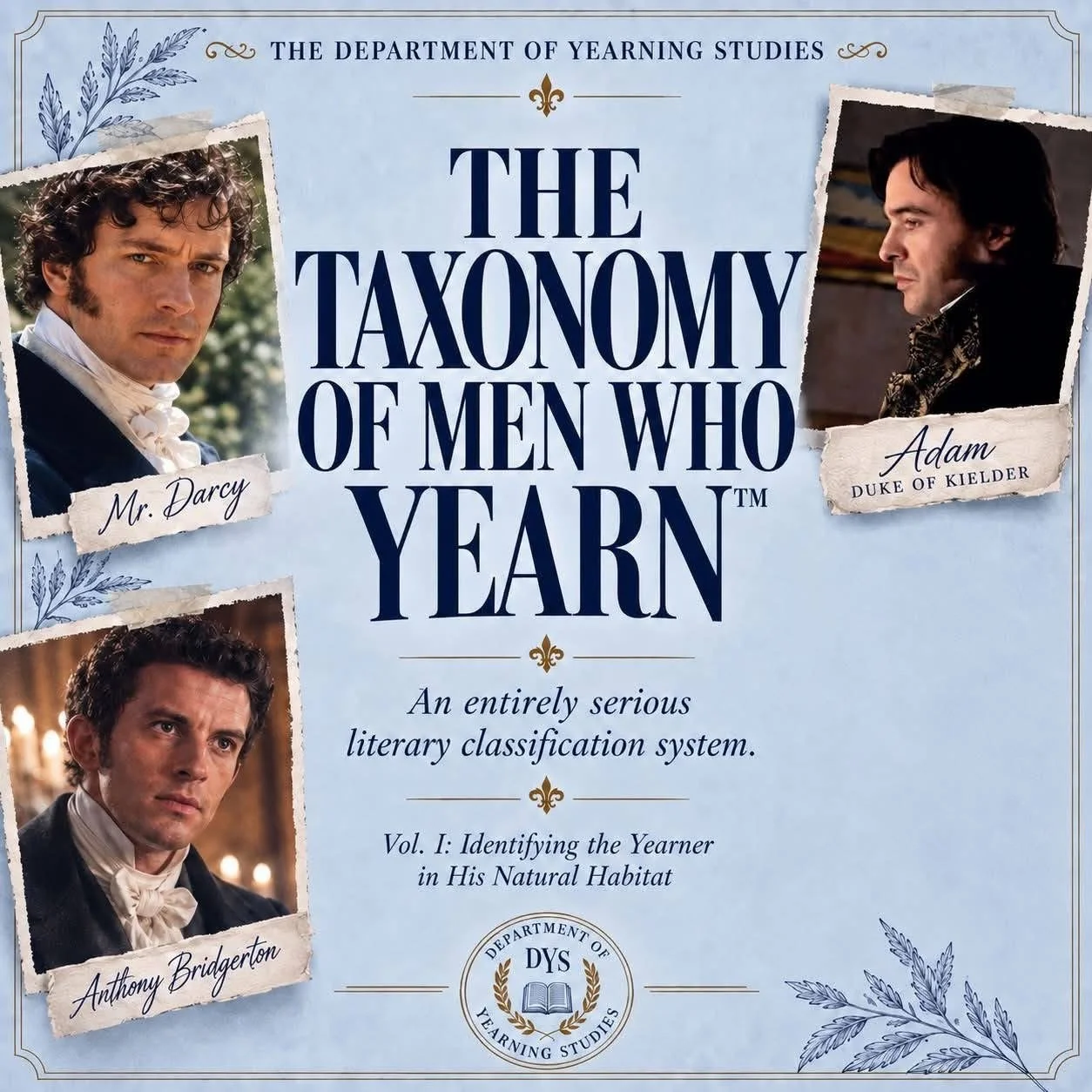
Welcome to The Taxonomy of Men Who Yearn™. How did we get here?
Like many important academic disciplines, this one began because I noticed a pattern. I love a good romance, but the heroes who stay with me aren’t necessarily the smoothest, the most charming, or even the most traditionally romantic. They’re the ones who yearn.
And yearning, I have discovered, is not simply attraction. It is restraint. It is longing. It is devotion that exists long before anyone is prepared to say the words out loud.
It is the tortured look across the ballroom. The quiet act of service nobody notices. The man who remembers something she said six chapters ago. The hero who has accepted that loving her may very well be the death of him and has apparently decided this is a perfectly reasonable way to live.
Naturally, I decided this required classification. Thus, the Department of Yearning Studies was born.
Our mission is simple: To identify, observe, classify, and occasionally lose all academic objectivity over fictional men displaying exceptional levels of yearning. For research purposes, obviously.
The inaugural specimens
Volume I began with five gentlemen who demonstrate that yearning is not a single behavior. It is, in fact, an entire ecosystem. There is:
Mr. Darcy (the Colin Firth version), one of literature’s foundational specimens and proof that a man can spend half a novel looking deeply inconvenienced by the fact that he has fallen desperately in love.
Adam, the Duke of Kielder, whose particular brand of yearning is buried beneath approximately seventeen defensive walls, several acres of Northumberland wilderness, and a personality specifically designed to discourage human interaction.
Captain Wenthworth, a case study of yearning manifested as wounded pride, restraint and feelings he has absolutely not gotten over.
Anthony Bridgerton, a fascinating case study in what happens when a man attempts to defeat yearning through sheer stubbornness and discovers, rather spectacularly, that yearning has other plans.
Tom Hayward, representing yet another variation of the condition—because no respectable taxonomy would assume all yearning men behave the same way.
Some brood. Some repress. Some sacrifice. Some stare. Some become catastrophically bad at pretending they are unaffected. All yearn.
But what actually qualifies as yearning? True yearning requires emotional stakes.
There must be something standing between the man and the person he loves: duty, pride, circumstance, fear, class, timing, his own spectacular emotional incompetence… Something. This is the material we study. And why do we love them so much? Because yearning makes love feel earned.
Before the kiss, before the declaration, before the happily ever after, we get to watch someone slowly become incapable of imagining his life without another person in it. And perhaps that’s why the smallest moments often hit harder than the grand gestures. By the time the yearner finally reaches for her hand, we know what it cost him to do it. By the time he says I love you, we’ve already watched him say it a hundred different ways.
And when that carefully controlled man finally breaks? Well. The Department has charts.
Welcome to Volume I
Below you’ll find the original specimens that launched The Taxonomy of Men Who Yearn™, along with their classifications and the Department’s highly scientific observations.
Please examine the evidence carefully. Disagreement is permitted. Strongly worded nominations for future study are encouraged. And if you finish Volume I thinking, Excuse me, how did you leave out ______? Excellent. The peer-review process is working exactly as intended.
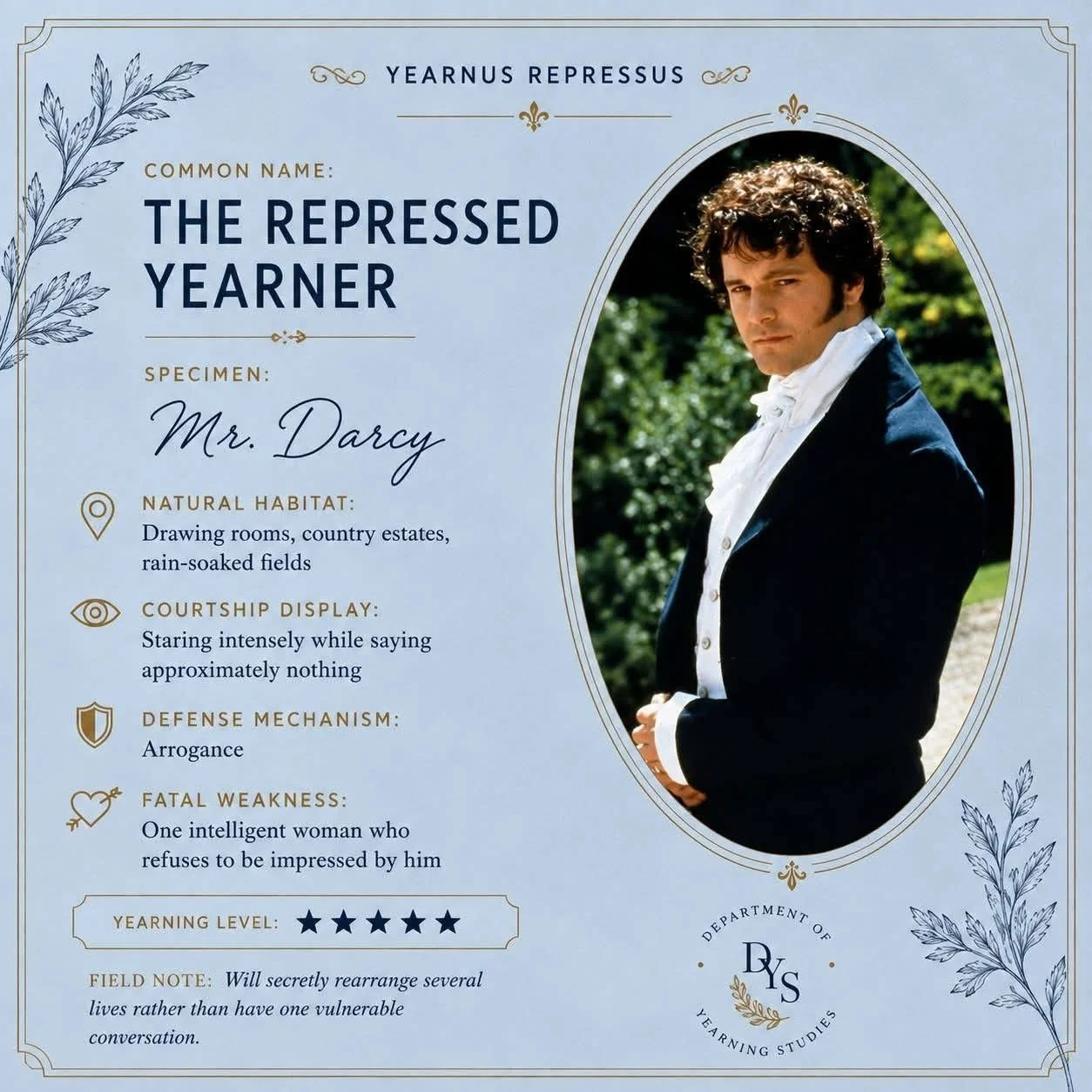
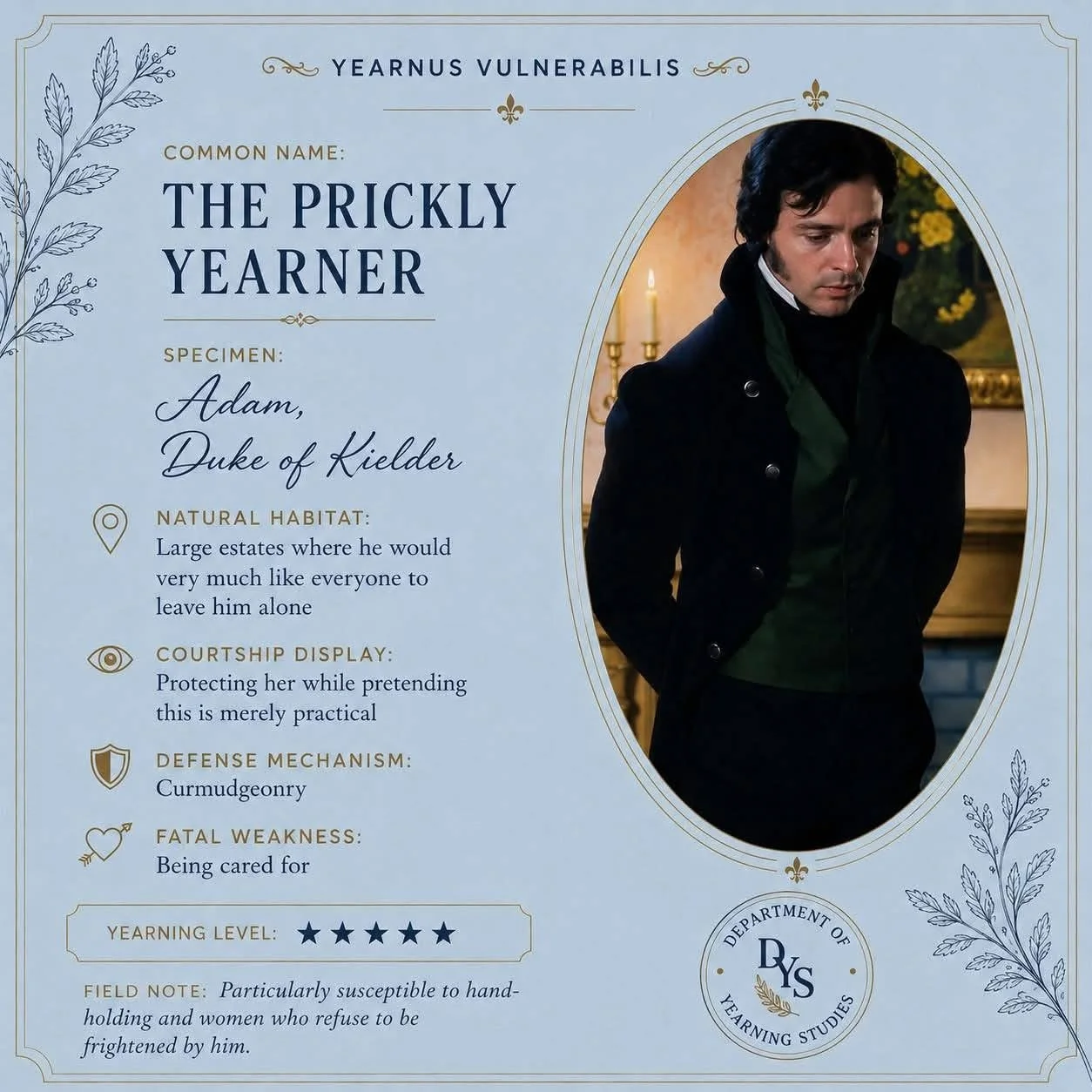
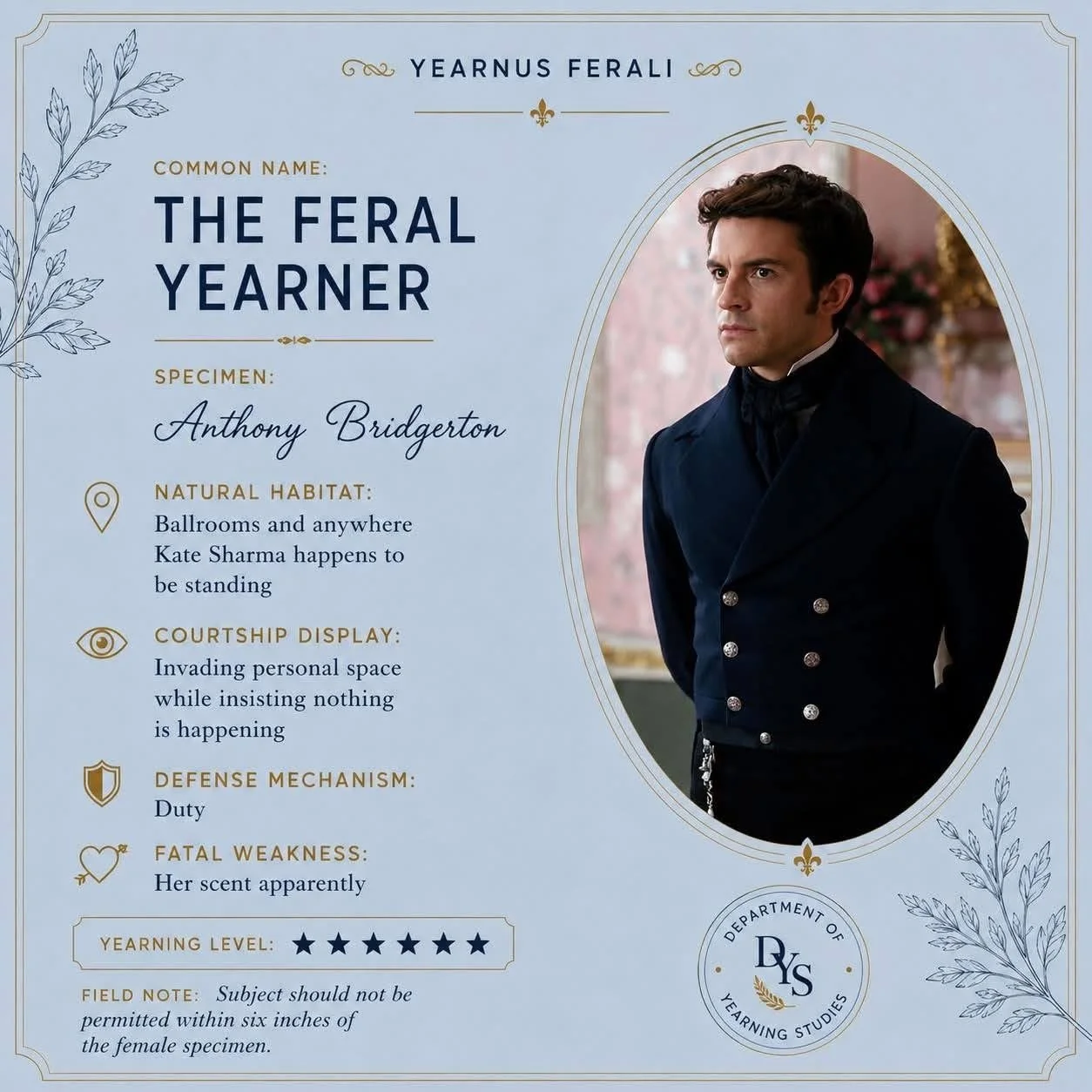
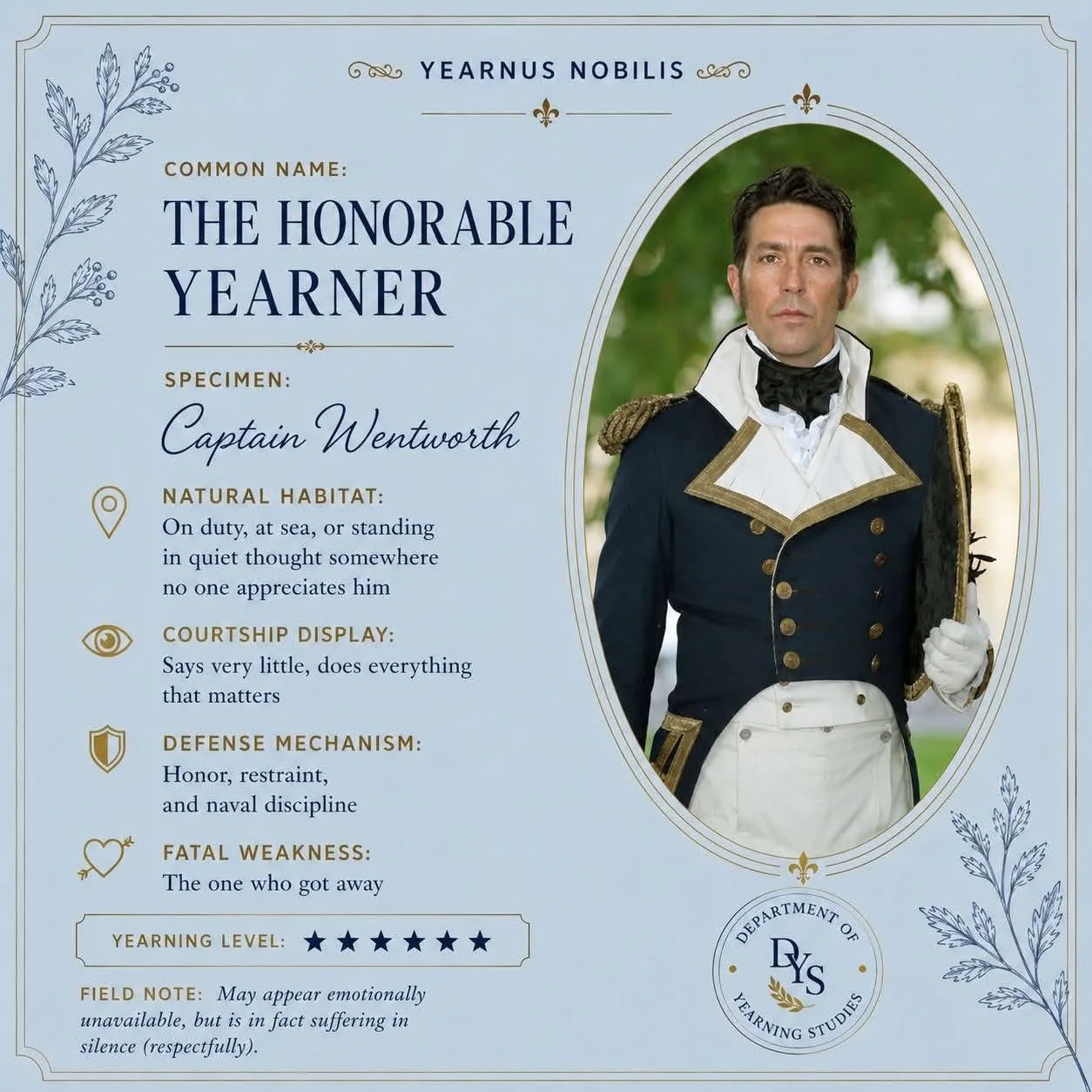
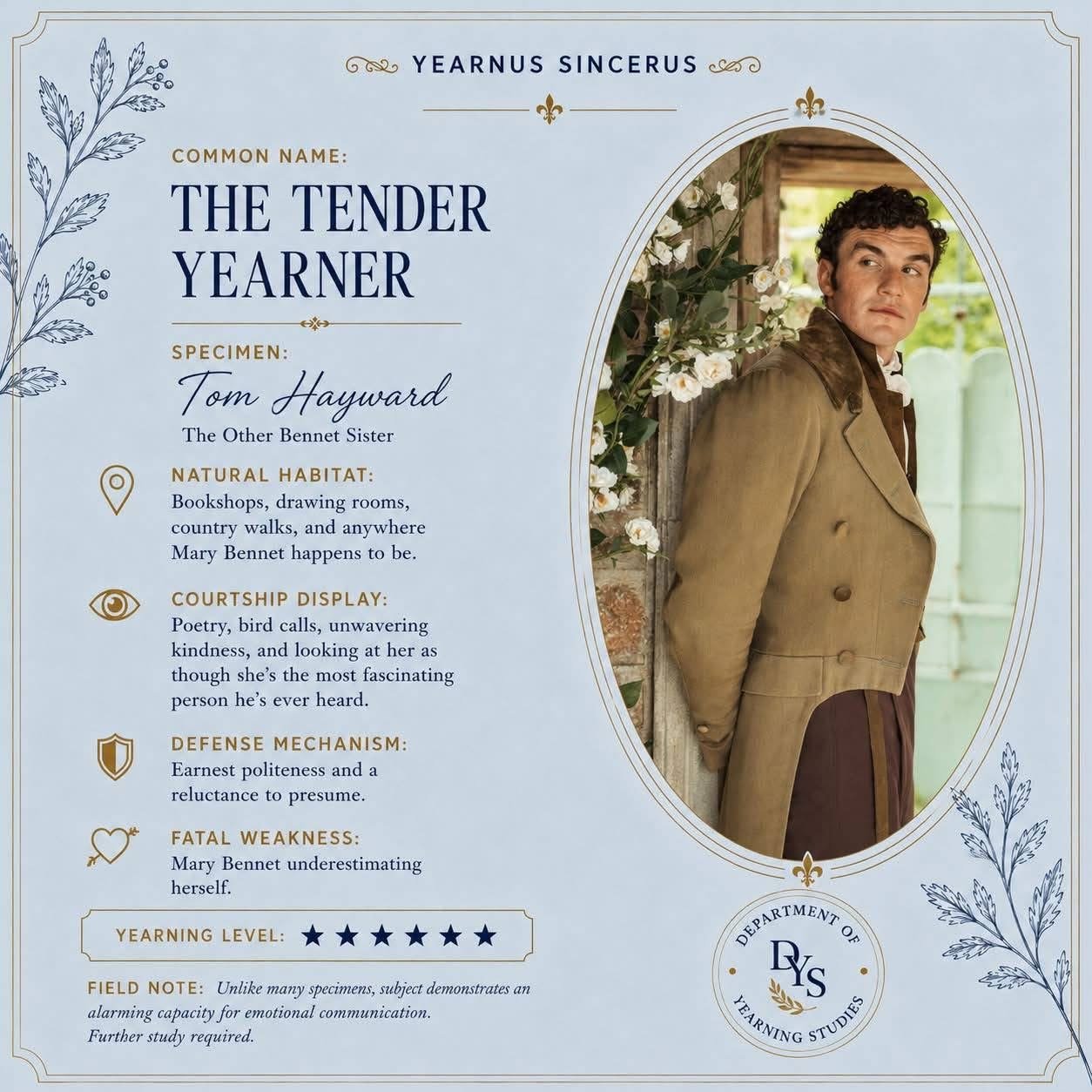
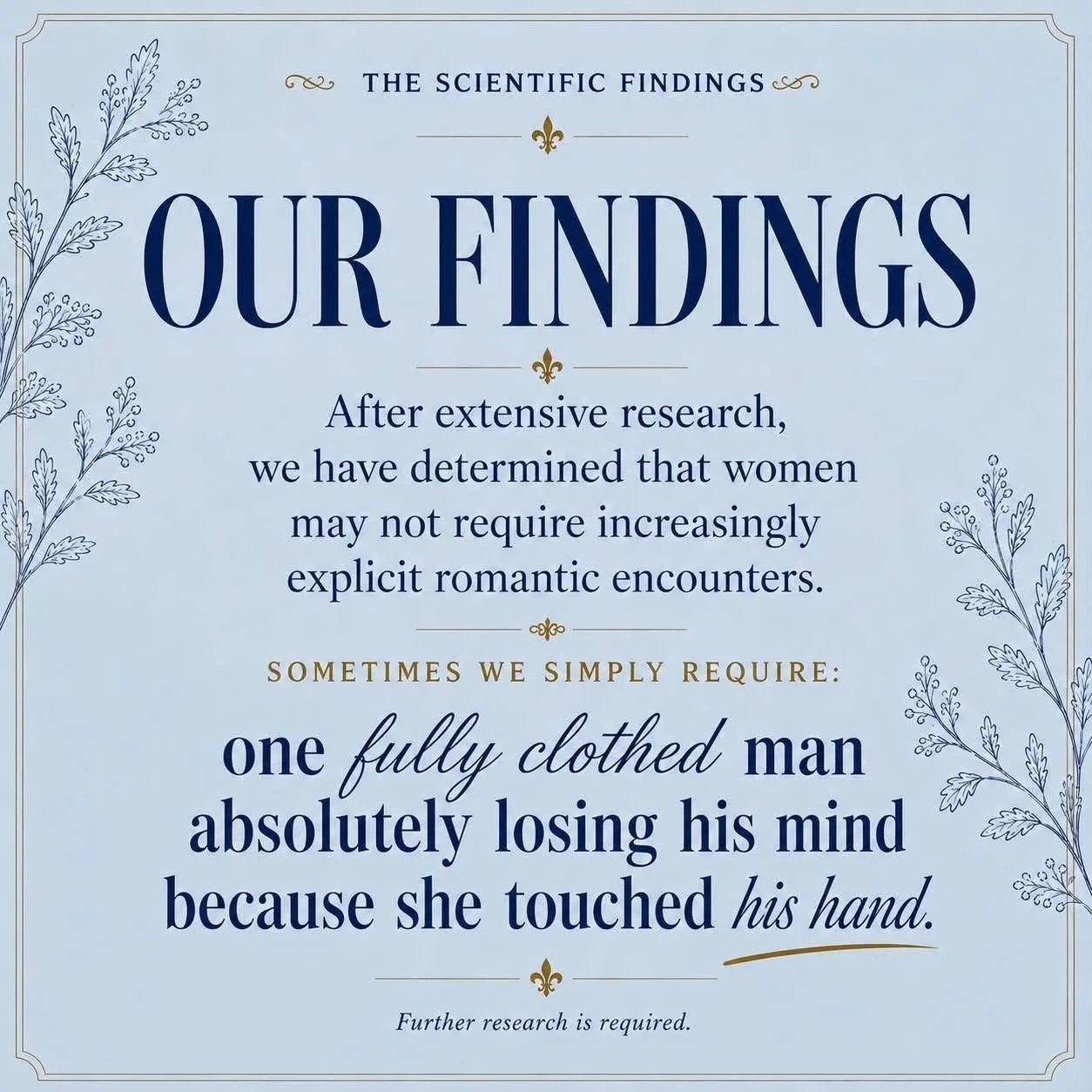
The Department of Yearning Studies is officially in session. Further specimens will be examined. Because apparently, yearning is a much larger field of study than originally anticipated.
Favorite book blog link-ups—
It’s Monday, What Are You Reading? at The Book Date
Top Ten Tuesday at The Artsy Reader
The Friday56 at My Heads if Full of Books
Book Beginnings on Friday at Rose City Reader
First Line Friday at Reading in My Superpower
Stacking the Shelves at Reading Reality
Sunday Post at Caffeinated Book Reviewer
Monthly Round-Up at Feed Your Fiction Addiction
Foodies Read at Based on a True Story (monthly)
